


There is a moment, somewhere between your first morning in Lisbon and your third café stop of the day, when you realize that, in Portugal, tiles are absolutely everywhere. On the front of buildings, inside churches, along station platforms, wrapping around fountains in village squares. You start noticing them the way you notice a good song playing in the background. At first casually, then with growing attention and eventually with the kind of focus that makes you stop mid-street and take a photograph of a wall.
Portuguese tiles are far more than decoration. They are how Portugal tells its story and once you start reading it, you cannot really stop.
1. What Are Azulejos and Why Does Portugal Take Them So Seriously
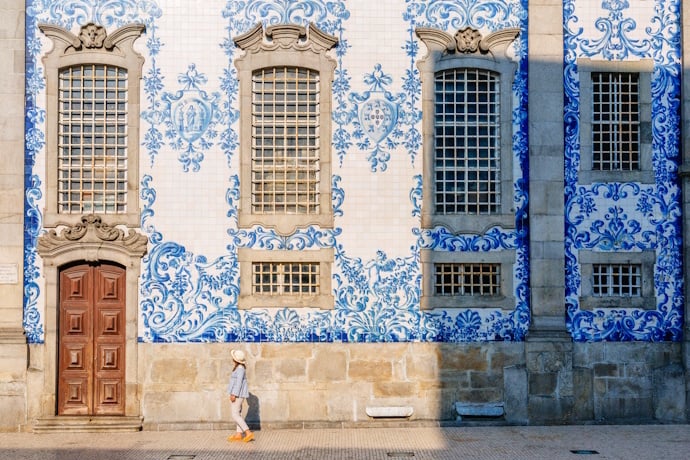
The word azulejo comes from the Arabic "al-zulaij," meaning polished stone and the tradition arrived in Portugal in the 15th century, carried across from the Moorish south. What started as geometric patterns in earthy tones gradually became something distinctly Portuguese: elaborate narrative scenes painted in blue and white, covering entire walls of churches, palaces and public buildings with the kind of ambition that suggests someone, at some point, decided that if a surface existed it probably needed a tile on it.
The cultural weight behind Portuguese tiles goes well beyond aesthetics. For centuries, tiles were used to tell stories, mark status, record history and decorate everything from the grandest royal palace to the humblest village chapel. They survived earthquakes, sea voyages and several centuries of changing taste and they are still being made by hand today in workshops where the techniques have barely changed. That continuity is part of what makes them so compelling to anyone paying attention.
2. Where to Find the Most Beautiful Tiles in Portugal
In Portugal, tiles turn up everywhere but some places make the encounter feel genuinely extraordinary. Here is where to start looking.
Lisbon
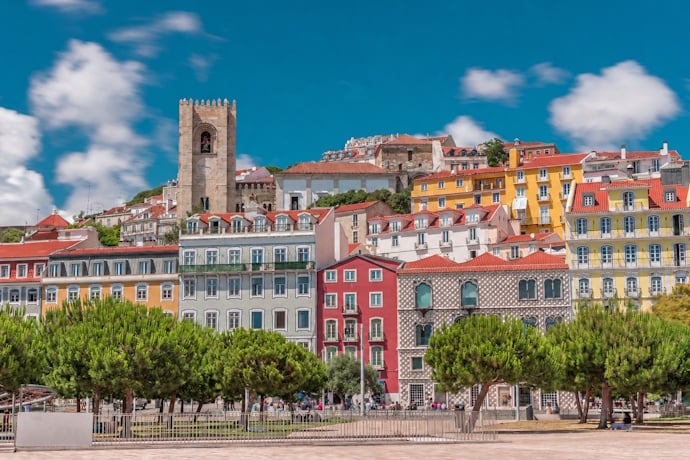
Lisbon is the obvious place to begin and it more than justifies the reputation. The city's facades are covered in tiles in every pattern, color and era: geometric, pictorial, Art Nouveau, plain white with a cracked glaze that makes them look like they have a story to tell, which they do. Walking through Alfama is less a sightseeing exercise and more a slow accumulation of detail: a tiled staircase catching the morning light, a facade in faded blue that has been there longer than anyone can remember, a doorway that stops you without quite knowing why.
The further you go from the main streets, the more personal the tilework feels, less monumental and more like something the city has been quietly adding to for centuries. The National Tile Museum in Lisbon traces the entire history of the tradition from its Moorish origins to contemporary production, for those who want the full picture in one place.
Sintra
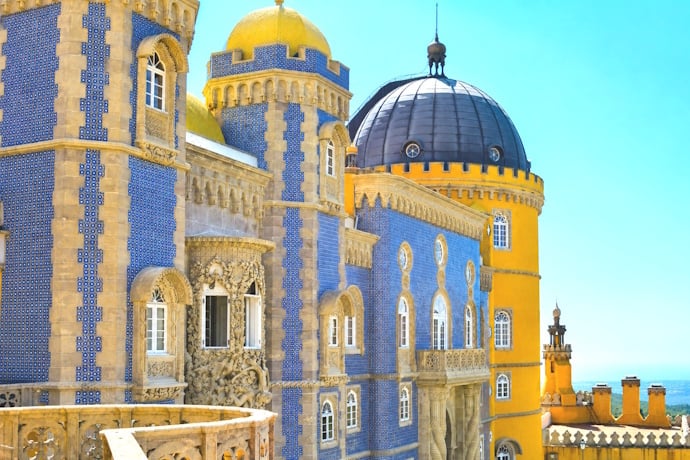
The Sintra palaces use tiles in ways that surprise even people who think they know what to expect. The National Palace of Sintra holds both ends of the spectrum: the Sala dos Brasões (Coats of Arms Room) is elaborately decorative, and its walls are adorned with intricate panels of hunting scenes and coats of arms, while other rooms go cool, geometric, and almost meditative by contrast.
The Pena Palace takes a different approach entirely, bold colors and ornate patterns that suit the building's general determination to be as visually dramatic as possible. The tiles here are not background detail. They are very much the point.
Porto
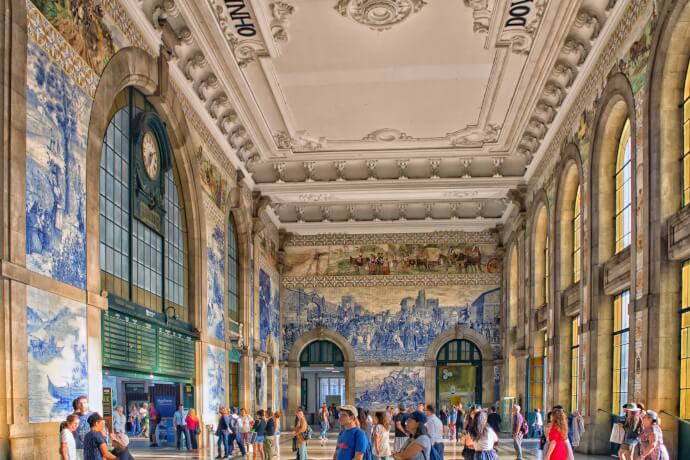
Porto's relationship with tiles has its own particular character. The city uses them on a larger scale and with a directness that suits Porto's personality well. The São Bento station in Porto is the most visited example and it earns every photograph: the entrance hall is covered floor to ceiling in blue and white panels depicting scenes from Portuguese history, the kind of public artwork that stops commuters mid-stride on a Tuesday morning.
The Igreja do Carmo on the outside, São Ildefonso church on the outside too: Porto treats its tile-covered facades as a normal feature of city life, which somehow makes them even more impressive.

Small Villages
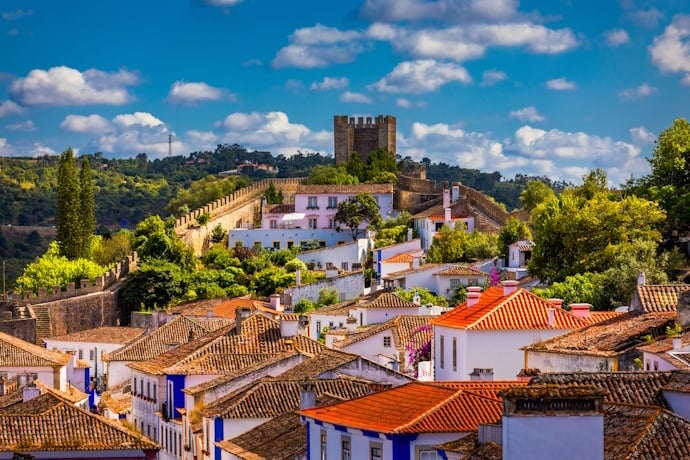
Outside the cities, tiles appear in ways that feel less curated and more genuinely lived-in. The village of Óbidos is one of the most striking examples: whitewashed walls trimmed in yellow and blue, a parish church mostly covered in 17th-century blue and white panels and a general atmosphere that makes it very easy to spend twice as long as planned.
The further you go from the main routes, the more the tiles feel like something you discovered rather than something you were sent to see.
Hidden Places
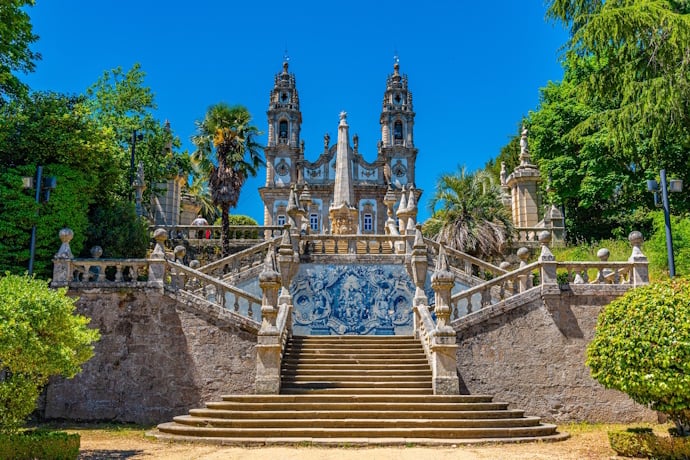
Some of the best tile encounters in Portugal happen by accident. A side street in Évora. A tiled staircase inside a Lisbon building you walked past twice before noticing the open door. A small chapel in the Alentejo with an interior that nobody warned you about. Or Lamego's elegant Sanctuary of Nossa Senhora dos Remédios, defined by a compelling blue and white tile panel. Portugal rewards the detour and the willingness to turn left when the map suggests going straight. The tiles are there. They are just waiting for someone to slow down long enough to find them.
3. The Experience of Painting your own Azulejo
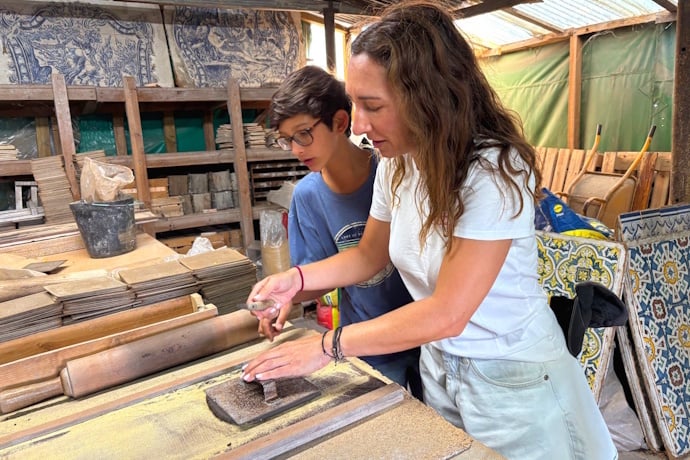
Vanessa Pinto has been helping travelers discover Portugal for years as Director of Sales at TourTailors. Recently, she took a step back from the itineraries and joined her children for a tile painting workshop in Lisbon. This is what she found:
"A few weeks ago, I joined my children for a traditional azulejo painting workshop here in Portugal, and what I expected to be a simple activity became one of our favorite family memories.
We sat down with a local artist who explained the history of the patterns with the easy confidence of someone who has loved something their whole life. We chose our designs, picked up the brushes and started painting. My children were focused in a way I rarely see from them. It was almost therapeutic, the kind of quiet focus where everything else stops competing for your attention. There is something about the repetition of a geometric pattern, the precision it requires, the slow way a design comes together under your own hand, that makes an afternoon feel genuinely well spent. We took our tiles home. They are on the kitchen shelf now and they are, without question, the best souvenir we have ever brought back from anywhere.
This is exactly the kind of experience that is more powerful in memory than in photographs but that stays with you in a way that even the grandest landmarks sometimes fail to match. When traveling to Portugal, add it to the trip as something worth planning in advance and looking forward to, rather than saving it as a backup plan for a spare afternoon!"
Create Your Own Portuguese Memory!
Portugal has no shortage of things to see and do. But among everything the country offers, learning to paint a tile sits in a category of its own: it is one of the few activities that connects you directly to a tradition that has been covering Portugal, top to bottom, for centuries. You come away with a different eye for everything around you, noticing the tilework on a station wall or a village church facade in a way you simply would not have before. And the tile you painted yourself makes for a far better souvenir than the ones sold at street markets, like Feira da Ladra, provenance questionable, price negotiable.
If you would like to experience this and discover more of what makes Portugal so distinct, get in touch and we will help you design an itinerary that brings you closer to its traditions.