


Italy’s villas and gardens reveal just how much imagination can go into a place. A hillside becomes a theater of fountains, an island holds a palace, and garden terraces open onto sweeping views of the Amalfi Coast. During the Renaissance, gardens gave wealthy families a way to express their taste and ambitions through art, planting, and elaborate water features. Today, you can see those ideas at work as you step into these estates.
Our Milan & the Lakes Tour offers inspiration for exploring the northern lakes, home to several of the Italian gardens featured here. Further south, Florence, Lazio, and Campania offer very different settings and stories. These ten villas and gardens show what makes each place special, with suggestions for nearby towns and sights to help you include your favorites in your plans.
1. Villa del Balbianello on Lake Como
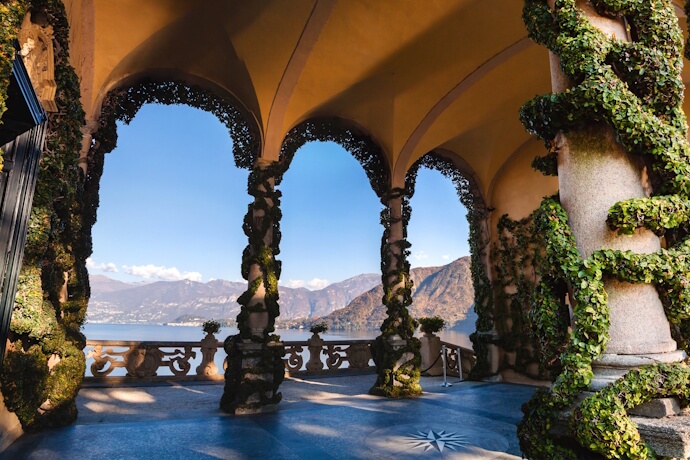
With gardens overlooking Lake Como, Villa del Balbianello gives you plenty of reasons to pause and enjoy the view. Paths lead past carefully maintained trees and terraces above the lake, while the villa’s columned pavilion offers views across the water. Some spots may look familiar after appearances in Star Wars Episode II and Casino Royale, making the villa an appealing stop for anyone interested in filming locations in Italy.
The villa was once home to explorer Guido Monzino, whose travel collections and expedition memorabilia remain inside. Book a guided interior visit to learn more about his adventures, or choose garden admission to enjoy the grounds. Nearby Lenno is a pleasant place for a waterfront stroll, while Bellagio offers another stop during a trip through the Italian lakes.
2. Villa Carlotta in Tremezzo
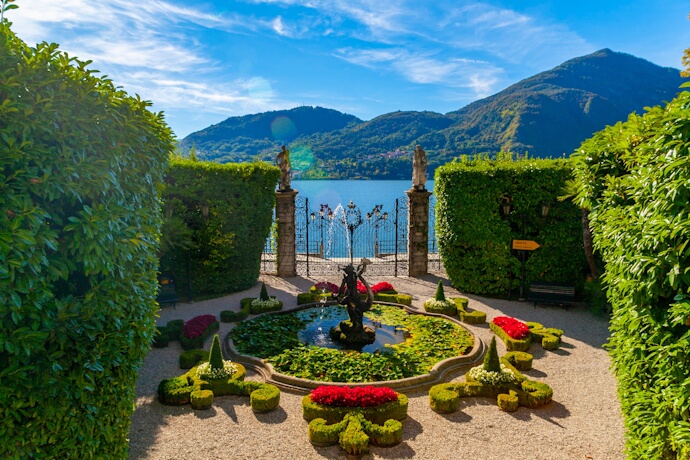
Spring brings plenty of color to Villa Carlotta, with azaleas and rhododendrons flowering throughout the gardens. Paths lead past tall trees and citrus pergolas, with views across Lake Como toward Bellagio. Take time to enjoy the planting and pause by the lake before heading inside.
The villa’s museum holds sculptures by artists including Canova and Thorvaldsen, as well as paintings by Hayez, giving art lovers another reason to visit. Admission covers both the gardens and museum, so allow time for each. Afterward, enjoy a stroll along Tremezzo’s waterfront and stop for a coffee overlooking the lake.
3. Isola Bella on Lake Maggiore
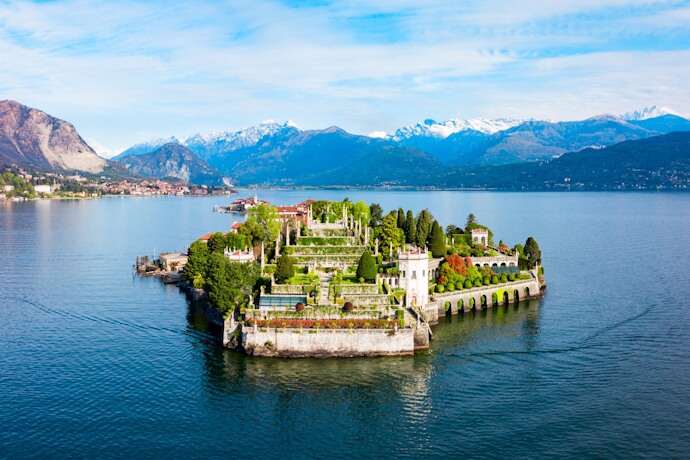
A boat trip across Lake Maggiore brings you to Isola Bella, an island occupied by a Borromeo family palace and its elaborate gardens. Ten terraces rise above the water, decorated with statues, fountains, and flowers. Look out for the unicorn above the Teatro Massimo, a symbol of the family that created this unusual island estate.
Inside the palace, richly decorated rooms offer a glimpse into the lives of its aristocratic owners. Outside, the garden paths provide different views of the terraces and surrounding lake. Make Isola Bella part of a day out from Stresa, allowing time for lunch on nearby Isola dei Pescatori or a visit to the gardens of Isola Madre.
4. Villa Taranto Botanical Gardens on Lake Maggiore
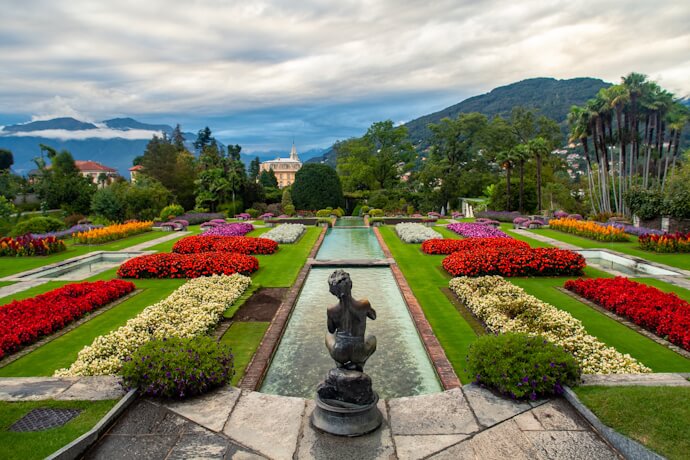
On the shores of Lake Maggiore in Verbania, Villa Taranto’s gardens offer something different with each season. Camellias and rhododendrons bring color in spring, while water lilies and dahlias reward a summer visit. Scottish captain Neil McEacharn created the gardens using plants collected across the world, turning the estate into a place to pursue his passion for botany.
Once home to the captain, the villa now houses the local prefecture, and its gardens are open for visitors to enjoy. Allow time to appreciate the flower beds, shaded paths, and terraced gardens before heading to Verbania’s waterfront for lunch or a coffee overlooking the lake. You can also include Stresa in your plans, strolling along its lakeside promenade or taking a boat trip to see more of Lake Maggiore.
5. Boboli Gardens in Florence
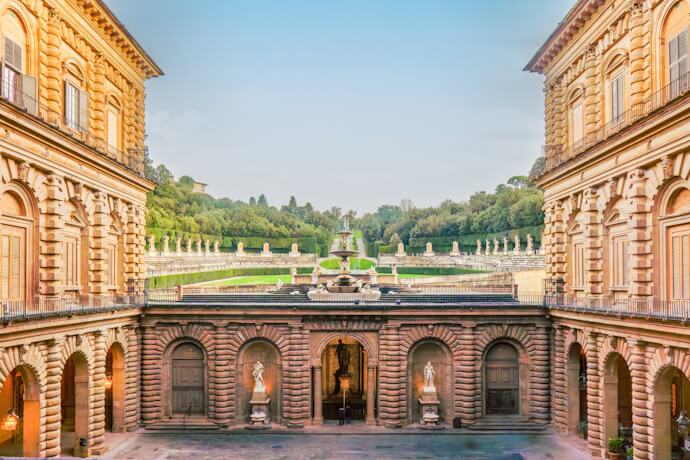
Behind Pitti Palace in Florence, the Boboli Gardens show how the Medici family brought their love of art into the outdoors. Ancient and Renaissance sculptures stand among the greenery, while decorated grottos reflect the court’s taste for elaborate garden designs. Developed over several centuries, the gardens helped inspire the design of other estates across Europe.
Look out for the Neptune Fountain and Buontalenti’s Grotto, with its elaborate sculptures and rockwork. The grounds rise uphill, so allow time for breaks as you make your way between the different areas. Pair the gardens with a visit to Pitti Palace, choosing a ticket that covers both, or spend the afternoon in the Oltrarno district for another perspective on Florence’s art and historic sights.

6. Villa d'Este in Tivoli
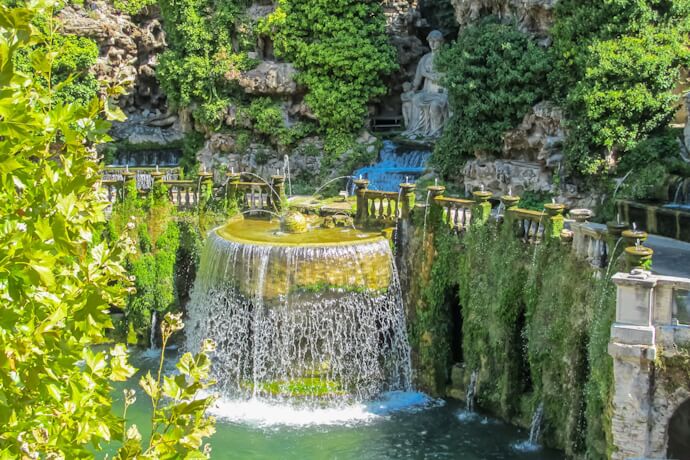
In Tivoli, near Rome, Villa d’Este shows just how inventive Renaissance garden designers could be with water. Cardinal Ippolito II d’Este commissioned the estate, filling its hillside gardens with fountains, pools, and shaded terraces. Along the Hundred Fountains, water pours through carved masks, while the hydraulic organ uses water to produce music.
Take time to follow the paths between the fountains and pause on the terraces to appreciate the views. The gardens have plenty of steps and slopes, so comfortable shoes are a good choice. Make Tivoli a day trip from Rome, leaving time for lunch in town. You can also visit nearby Hadrian’s Villa to see the remains of an ancient Roman imperial residence.
7. Villa Lante in Bagnaia
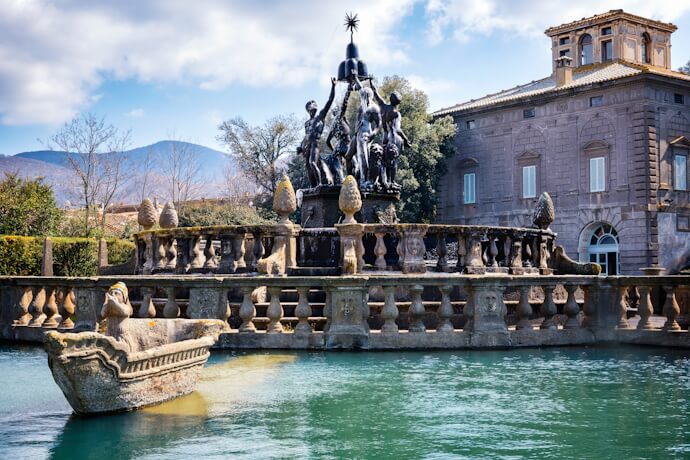
In Bagnaia, near Viterbo, Villa Lante offers a closer look at the creativity behind Italian gardens. Two matching pavilions stand beside formal planting beds, while fountains and a carved stone water channel link the terraces. Follow the water as you make your way through the gardens, pausing to admire the details at each level.
Look for the Cardinal’s Table, a long stone dining table with running water through its center, once used to keep drinks and fruit cool during outdoor meals. After your visit, head into Viterbo to see the Palazzo dei Papi and stroll through the medieval streets of the San Pellegrino district.
8. Garden of Ninfa in Lazio
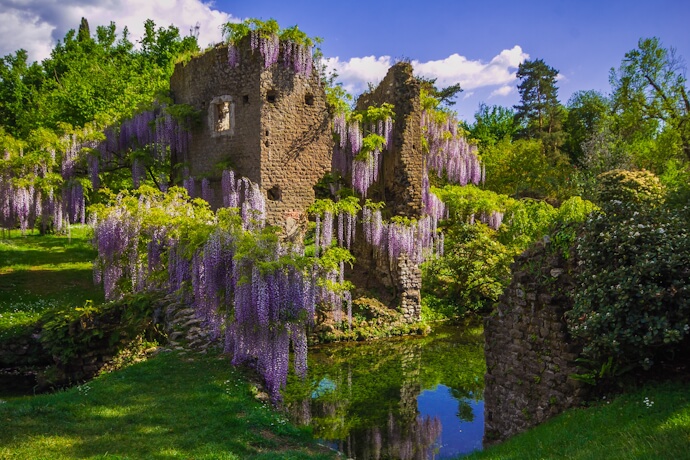
Near Sermoneta in Lazio, the Garden of Ninfa grows among the remains of a medieval town. Roses climb old stone walls, trees shade the river, and ruined churches recall the community that once lived here. The Caetani family developed the garden during the twentieth century, making the surviving buildings part of its design.
Follow the paths beside the water and notice how the planting grows around bridges, arches, and stretches of medieval walls. Visits follow a published calendar and require advance booking, so arrange your date before planning the rest of the day. After the gardens, head to nearby Sermoneta to see its hilltop streets and Caetani Castle.
9. Villa Rufolo in Ravello
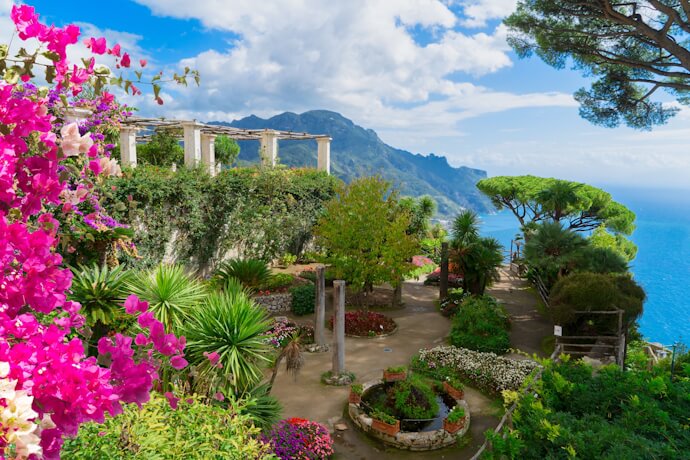
In Ravello, high above the Amalfi Coast, Villa Rufolo opens onto terraced gardens overlooking the sea. Its medieval towers and cloister recall the wealthy Rufolo family, who built the estate in the thirteenth century. Scottish owner Francis Neville Reid developed the gardens during the nineteenth century. When Richard Wagner visited in 1880, he associated the setting with Klingsor’s enchanted garden in his opera Parsifal. Today, the gardens host concerts during the Ravello Festival, with the coastline as a backdrop.
Step through the cloister and spend time on the garden terraces, looking across the coastline below. The entrance is beside Ravello’s cathedral square, so you can easily include both in your day. Afterward, pause for lunch in town or head down to Amalfi, whose cathedral and waterfront offer another perspective on the Amalfi Coast.
10. Royal Palace of Caserta and Its Gardens
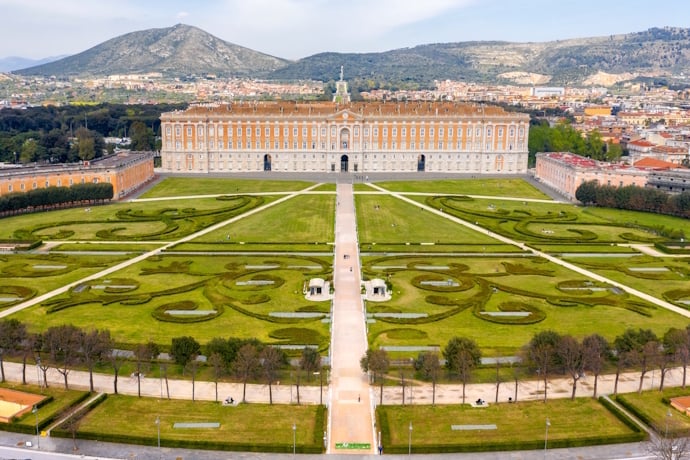
Near Naples, the Royal Palace of Caserta shows how grandly the Bourbon monarchy imagined life outside the capital. Beyond the royal apartments, a long avenue of pools and fountains stretches toward a waterfall. Sculptures of mythological figures fill the fountains, while the view back toward the palace helps you appreciate the scale of the estate.
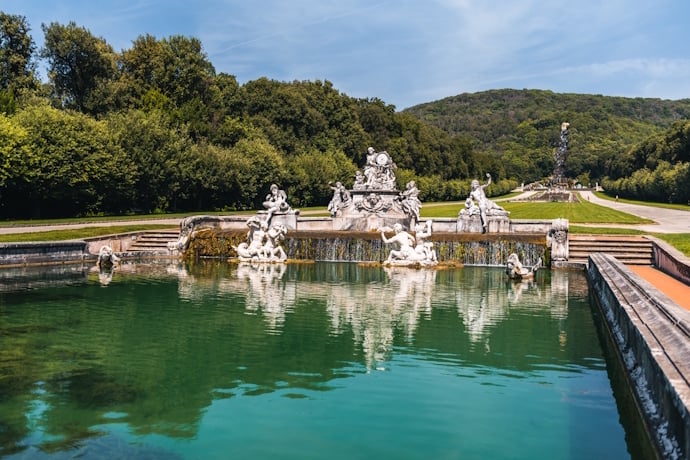
Follow the water avenue toward the Fountain of Diana and Actaeon, then explore the English Garden, with its winding paths, unusual plants, and ornamental ruins. Allow a full day if you want to see the palace interiors as well as the grounds, with time for breaks. The park shuttle offers a convenient way to cover the longer distances.
Tips for Visiting Italian Villas and Gardens
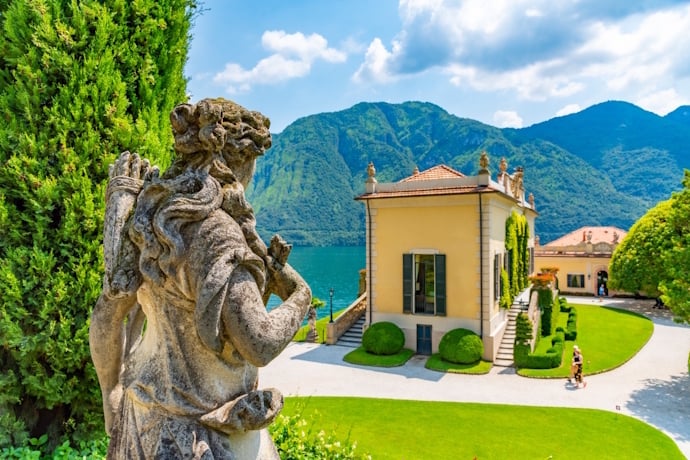
Choose your dates around what you most want to see. Spring brings colorful blooms to the lake gardens, while early fall offers another opportunity to enjoy the grounds in milder weather. Flowering periods vary by plant and location, so check seasonal highlights before planning your visit. Our guide to Italy by season can help you decide when to travel.
Check each property’s opening calendar and book ahead when required, particularly for Villa del Balbianello and Ninfa. Review ticket options carefully, as garden admission and interior visits may be sold separately. Allow extra time for larger estates such as Caserta, and leave room for breaks. Comfortable shoes are useful on gravel paths and terraces, while accessibility maps can help you choose routes suited to your mobility and preferred walking distance.
Spring into Italy’s Magical Gardens
Some of the most beautiful places in Italy owe their appeal to the people who imagined and created them. These villas and gardens offer a different way to get to know the country’s history, through the homes people built, the plants they collected, and the landscapes they carefully designed. Choose the places that catch your interest and leave room for the nearby towns, a lunch overlooking the water, or an afternoon among the palace collections. Our Milan & the Lakes Tour offers ideas for exploring the northern estates, with time in Milan and around the lakes. If a particular garden has caught your attention, tell us what you have in mind, and we can help you plan a personalized trip through Italy.



