


Portugal's churches hold centuries of history, extraordinary works of art, and fascinating stories. Holy Week (Semana Santa) is a special time to experience the country's religious and cultural traditions. Across Portugal, centuries-old processions, candlelit ceremonies, and Easter celebrations bring historic streets and churches to life.
It's a wonderful opportunity to discover some of the most remarkable churches in Portugal, admired for their colorful tiles, magnificent architecture, and artistic treasures. Beyond Holy Week, these churches offer fascinating glimpses into Portugal's history, art, and culture throughout the year.
1. Church of São Francisco, Porto
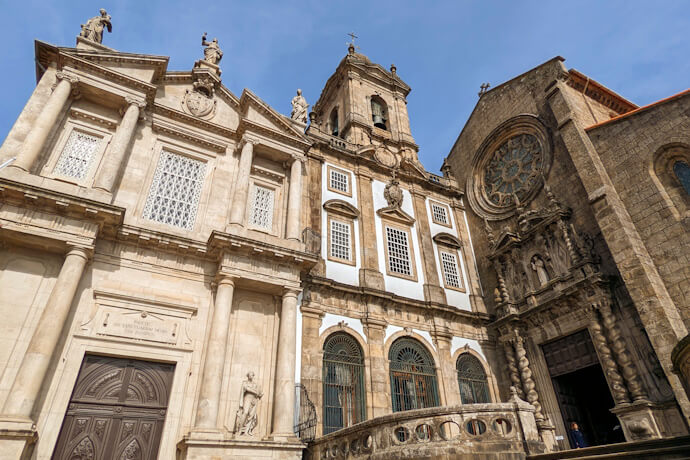
Among the city's remarkable historic churches, São Francisco Church in Porto stands out for its extraordinary Baroque interior, hidden behind Gothic stone walls. Its architecture and decoration reveal different periods of the city's artistic and religious heritage.
Built in the 14th century, the church underwent a remarkable transformation in the 18th century, when intricate gilded woodcarvings covered its altars, columns, and ceilings. Look for the Tree of Jesse, an elaborate sculpted family tree depicting the ancestry of Jesus, and a rare 15th-century mural of Our Lady of the Rose.
2. Válega Church, Ovar
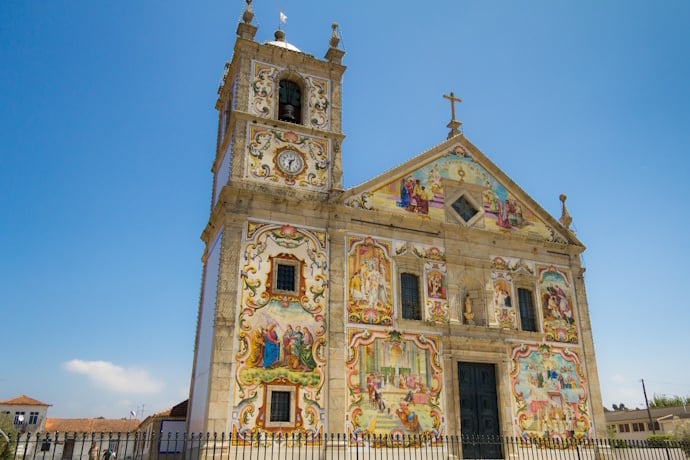
Just south of Porto, Ovar is a lovely coastal town with a strong tradition of decorative tilework, visible on many of its historic buildings. A short distance away, Válega Church takes this artistic tradition to another level, with its facade covered in colorful azulejos illustrating scenes from the Bible. Although the church dates back to the 18th century, its spectacular facade was decorated in 1960. Inside, colorful tile panels, stained-glass windows, and richly decorated wooden ceilings offer even more to admire.
During Holy Week, Ovar's historic center becomes the setting for centuries-old religious processions. One of the most memorable takes place on Holy Thursday, when the Ecce Homo procession fills the streets with figures dressed in black, carrying torches and wooden rattles. In the silence of the night, religious statues are carried through the town, recreating scenes from the suffering of Jesus before his crucifixion.
3. Bom Jesus do Monte Sanctuary, Braga
About an hour north of Porto, Braga makes an excellent day trip, with its historic cathedral and remarkable religious heritage. During Holy Week, the city hosts the solemn Good Friday Procession of the Burial of Christ, when participants dressed in mourning accompany a ceremonial coffin representing Jesus through the historic streets.
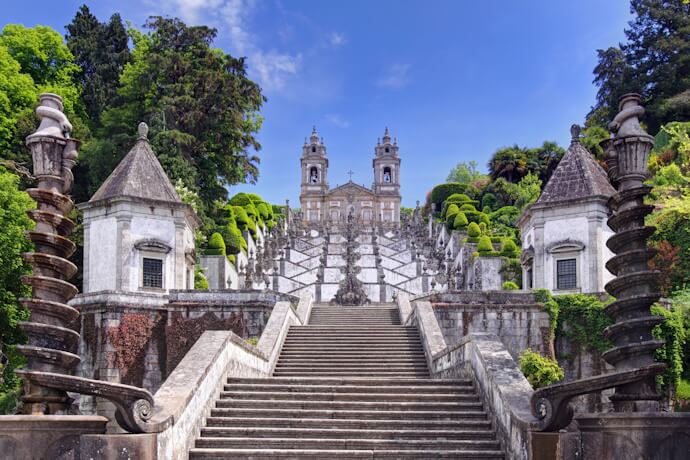
Overlooking the city, the UNESCO-listed Bom Jesus do Monte Sanctuary impresses with its monumental Baroque staircase, adorned with fountains and sculptures representing the Five Senses and religious virtues. The climb leads to a beautiful Neoclassical church, surrounded by gardens and panoramic views over Braga.
4. Old Cathedral of Coimbra, Coimbra
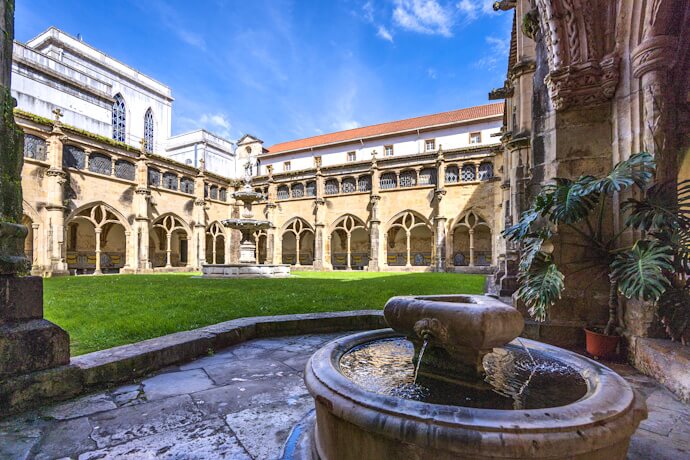
In central Portugal, Coimbra is one of the country's oldest cities, famous for its historic university, one of the oldest in Europe, and its rich medieval heritage. With its thick stone walls, narrow windows, and battlements, Coimbra's Old Cathedral looks almost like a fortress. Dating back to the 12th century, it stands out among Portugal's cathedrals as one of the finest surviving examples of Romanesque architecture.
King Sancho I, Portugal's second king, was crowned here in 1185. Inside, carved stone capitals and a magnificent late-Gothic altarpiece reward a closer look, while the 13th-century cloister reveals early Gothic details. Few buildings capture Coimbra's medieval past so vividly.
5. Church of São Roque - Lisbon
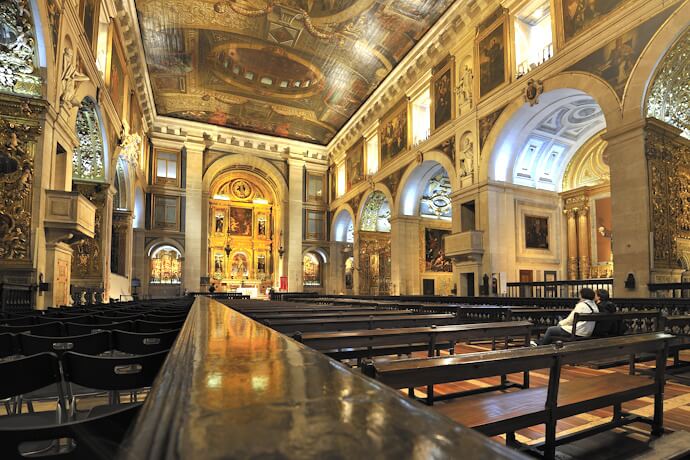
Among the many historic churches in Portugal, the Church of São Roque is particularly worth visiting for the extraordinary contrast between its simple facade and richly decorated Baroque interior.
Its greatest treasure is the Chapel of St. John the Baptist, built in Rome in the 18th century and transported to Lisbon in pieces. During Lent, the church also has a special role in Lisbon's religious traditions: the centuries-old Procession of the Lord of the Steps has historically departed from São Roque, carrying religious images through the city's streets.
6. Church of Santa Maria de Belém, Lisbon
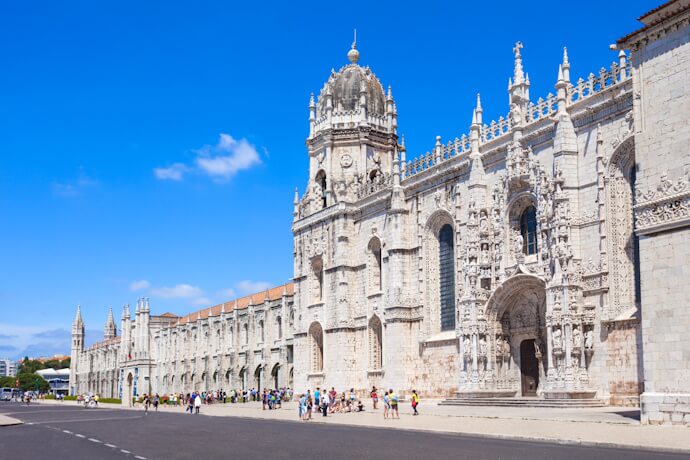
Lisbon's Belém district is a must for its famous custard tarts, riverside monuments, and maritime history. Among its treasures, Jerónimos Monastery stands out for its magnificent Manueline architecture, a uniquely Portuguese style inspired by the Age of Discovery. Its Church of Santa Maria de Belém impresses with elaborate stonework, slender columns, and soaring vaulted ceilings.
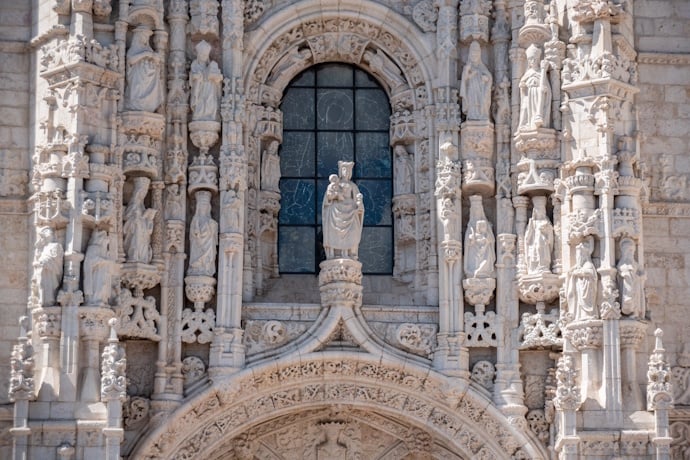
Inside, you will find the monuments to Vasco da Gama, the explorer who opened the sea route to India, and Luís de Camões, one of Portugal's greatest poets, celebrated for his epic poem about Portuguese maritime adventures. Nearby, Belém Tower and the Monument to the Discoveries are also worth visiting, offering further insight into Portugal's maritime history.
7. Alcobaça Monastery Church, Alcobaça
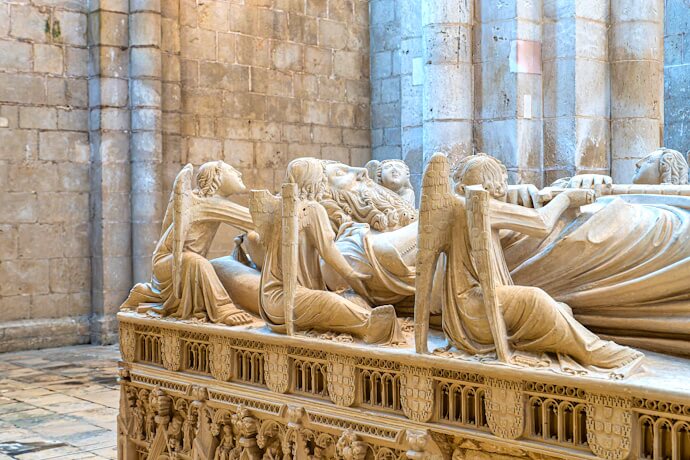
Not far from the coastal town of Nazaré, Alcobaça is a historic town with charming streets, traditional pastries, and a magnificent monastery that has stood at its heart for centuries. Recognized as a UNESCO World Heritage Site, its church impresses with soaring Gothic arches and an immense, almost unadorned interior.
But the Alcobaça Monastery also holds one of Portugal's most dramatic love stories. Here lie Pedro I and Inês de Castro, whose forbidden romance ended tragically when Inês was murdered on the orders of Pedro's father. Their beautifully carved tombs face each other, symbolizing the hope of reuniting after death and giving this monumental church a deeply human story.
8. Batalha Monastery Church, Batalha
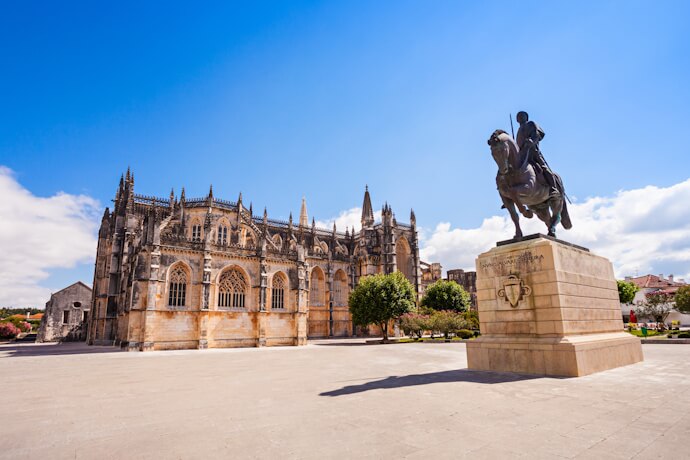
Built to celebrate a decisive victory in 1385 that secured Portugal's independence, Batalha Monastery is one of the country's most magnificent UNESCO World Heritage Sites. Inside, soaring Gothic arches, stained-glass windows, and elaborate stone carvings reveal the extraordinary skill of medieval craftsmen.
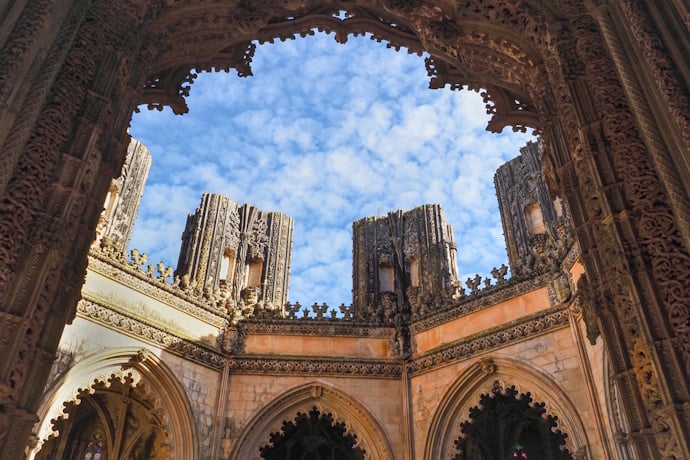
A short drive from Alcobaça, the town of Batalha grew around this extraordinary monument, which remains its most recognizable landmark. The Founder's Chapel impresses with its magnificent vaulted ceiling, while the Unfinished Chapels, with their intricate Manueline carvings and open-air design, are particularly fascinating to admire.
9. Church of São Francisco, Évora
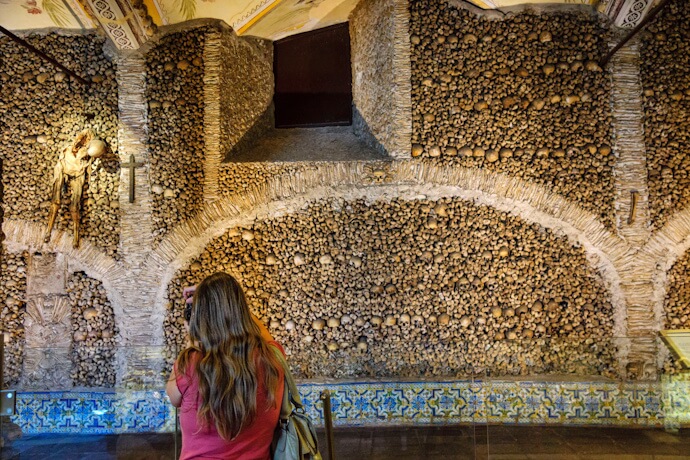
In the heart of the Alentejo region, Évora is a UNESCO-listed city celebrated for its Roman ruins, whitewashed streets, and remarkable historic monuments. Among them, the Church of São Francisco stands out for its Gothic and Manueline architecture and its famous Chapel of Bones (Capela dos Ossos). Decorated with thousands of human bones and skulls, this 17th-century chapel offers a striking reminder of life's fleeting nature, making it one of Portugal's most unusual religious monuments.
During Holy Week, Évora's historic streets host solemn religious traditions. On Good Friday, the Procession of the Burial of Christ carries a ceremonial coffin representing Jesus through the city, giving visitors a glimpse into the region's Easter customs.
10. Church of São Lourenço, Almancil
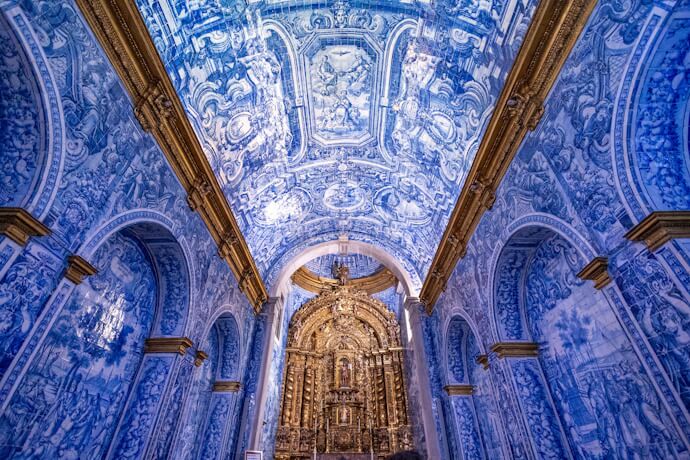
Beyond the Algarve's beaches, there is a rich cultural and artistic heritage to discover. Near Faro and Loulé, the small town of Almancil in Algarve is worth a stop for its Church of São Lourenço, whose modest exterior conceals a spectacular Baroque interior. Blue-and-white azulejos illustrate the life of Saint Lawrence, covering the walls, vaulted ceiling, and dome.
During Easter, nearby Loulé celebrates the centuries-old Mãe Soberana festival. On Easter Sunday, a procession carries a statue of the Virgin Mary through the town. Two weeks later, the festivities culminate in a spectacular procession up the hill to her sanctuary, accompanied by music and crowds of devotees.
More Than Churches, Stories Worth Discovering
Each of these churches in Portugal offers a different glimpse into the country's past, making them rewarding stops for anyone curious about the country's history and culture. During Holy Week, centuries-old traditions bring an added dimension to these visits, offering a chance to experience local celebrations and see how Portugal's heritage remains part of everyday life.
And with so much to discover throughout the year, there is always a reason to include these remarkable places in your plans. Ready to experience Portugal for yourself? Let TourTailors help you plan a personalized trip to Portugal, with unforgettable places and experiences along the way.



