


Portugal's history was written at sea. The explorers who mapped coastlines that the rest of the world had yet to name, the fishing communities that built their lives around the rhythm of the Atlantic, the rivers that carried goods, people and culture from the interior to the coast and back: water has shaped this country in ways that go far beyond geography.
To travel through Portugal by boat is to move through the element that shaped its cities, trade, landscapes and identity, to feel the scale of the terraced valley from the Douro river cruise below, to enter the Algarve's sea caves at the pace the tide sets, to sit in open Atlantic water and watch the wildlife that the ocean sustains. What follows is a journey through Portugal by water, from the Tagus waterfront in Lisbon to the whale-rich waters of the Azores, each one a different way of understanding a country that has always known where it belongs.
1. See Lisbon from the Tagus River
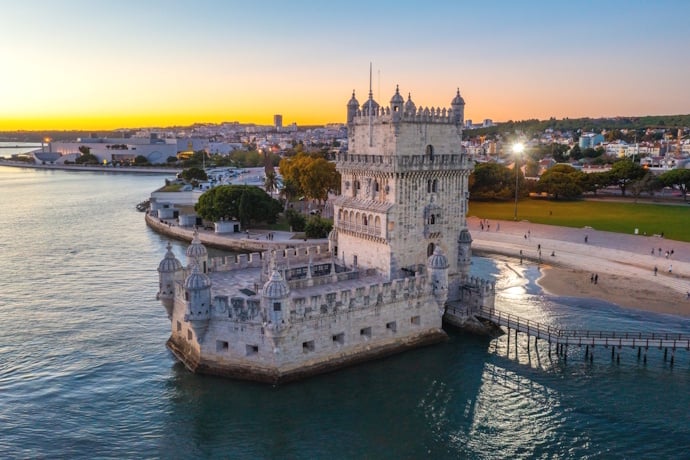
Lisbon was built facing the Tagus and the river has always been central to how the city understands itself. The great Age of Discovery set sail from these banks, the Torre de Belém stood watch over ships leaving for unknown coastlines and the waterfront monuments that line the riverside today still carry that weight. Lisbon boat tours move along this stretch in a way that puts the whole story into proportion: the Padrão dos Descobrimentos, the Torre de Belém, the 25 de Abril bridge spanning the width of the estuary, with the Sanctuary of Christ the King overlooking the city from the southern bank, all of them seen from the water they were always oriented toward.
The Tagus at this point is wide enough to feel like a threshold between river and sea, and that ambiguity is part of what makes a boat trip here feel significant rather than merely scenic. Lisbon is one of Europe's great maritime capitals and the waterfront is where that identity is most legible. Seeing it from the deck of a boat, with the city rising behind its monuments and the estuary opening ahead, is the most honest introduction the city can offer.
2. Cruise Through the Vineyards of the Douro Valley
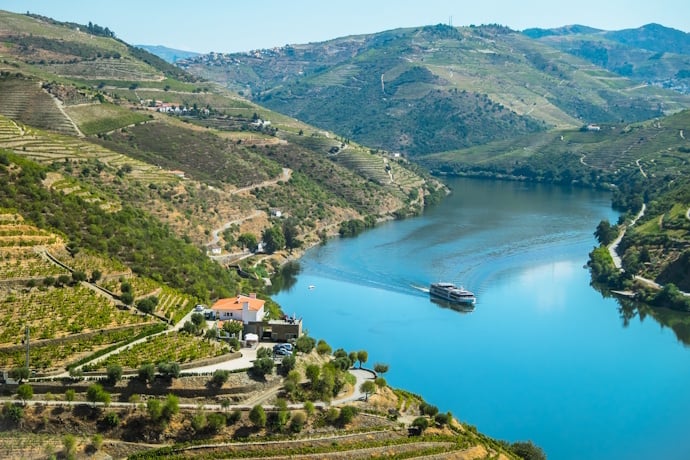
The Douro River cruise is Portugal's most iconic inland journey and it earns that description without exaggeration. The river cuts through a valley where the slopes have been terraced into vineyards for centuries, and from the water those terraces climb in long, precise lines that look almost architectural against the hillside. The light over the valley changes constantly as the river curves and the boat passes between the steep slopes, with quintas appearing above the waterline and the occasional village reflected in the river below.
Pinhão is one of the most photogenic stops, a small riverside village surrounded by vineyard estates where wine has been produced for generations. Tastings at a quinta, lunch on the riverside, a viewpoint above the valley where the full scale of the terracing becomes clear: the Douro is the kind of place where the journey and the destination are the same thing and the afternoon consistently takes longer than planned.
3. Cross the Sado Estuary in Search of Dolphins
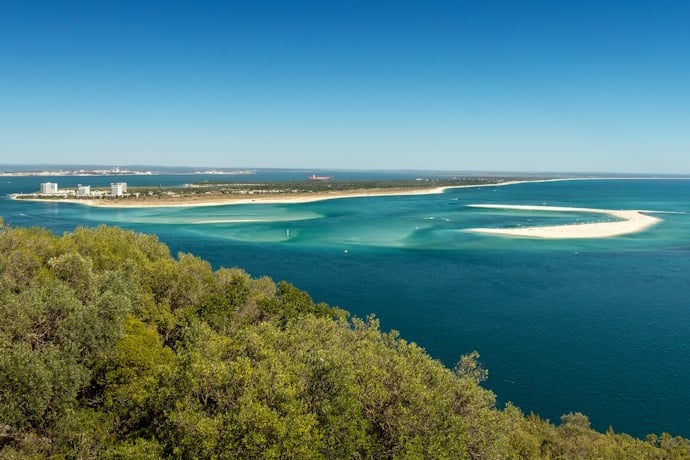
The Sado Estuary, between Setúbal and the Tróia Peninsula, is home to a resident community of bottlenose dolphins that have been living in these waters for decades. Boat trips through the estuary follow routes where sightings are common, but the experience is shaped just as much by the setting as by what may appear in the water. On one side, the Serra da Arrábida drops to the sea in slopes covered in Mediterranean scrub. On the other, the long sand bar of Tróia extends toward the open ocean.
The dolphins here have the confidence of locals. Born in the estuary, they move through its waters as if the boats are simply part of the background. Watching them rise near the hull gives the experience a quiet closeness, more like entering their world than observing it from a distance.
4. Explore the Caves and Cliffs of the Algarve
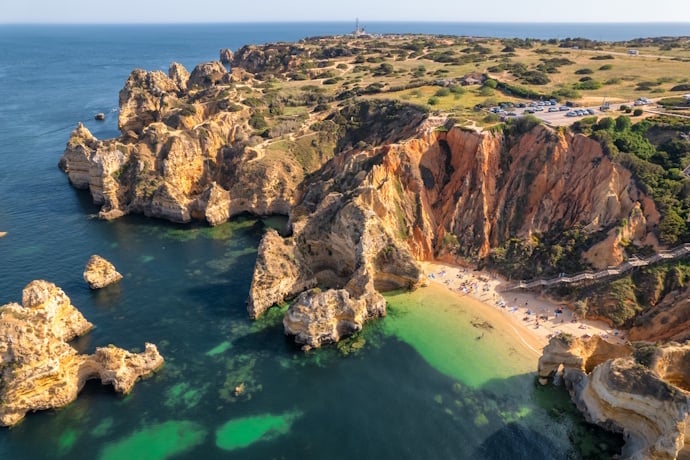
The coastline around Lagos is the result of centuries of Atlantic erosion working on golden limestone, and the outcome is one of the most visually varied stretches of coast in Europe. A Lagos boat tour around Ponta da Piedade passes through arches, into grottoes, past sea stacks and alongside cliffs that have been hollowed and shaped into forms that seem unlikely until you are looking directly at them. The scale shifts constantly: passages narrow to the width of a small boat, then open into wide coves where the water turns pale green over sand.
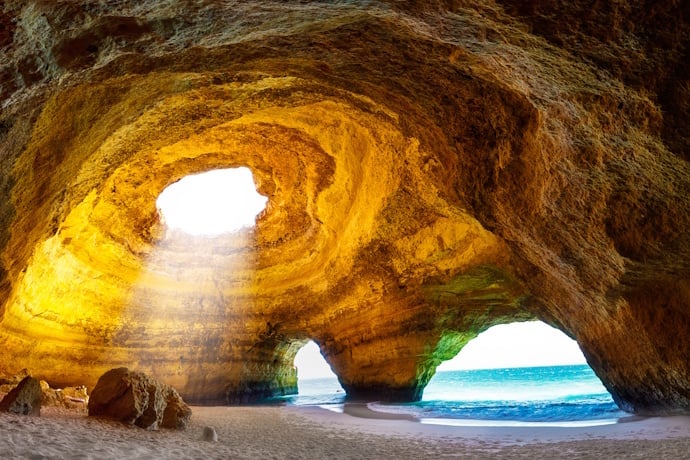
The Benagil Cave, further along the central Algarve coast, belongs in this same category. A cathedral-shaped cavern with an opening at the top that lets a column of light fall directly onto the beach inside, it is the kind of place that tends to produce silence on the boat rather than conversation. The wider coastline between Lagos and Carvoeiro contains dozens of formations and beaches that only a boat can reach, making this stretch one of the most rewarding coastal journeys Portugal has to offer.

5. Drift Between the Islands of Ria Formosa
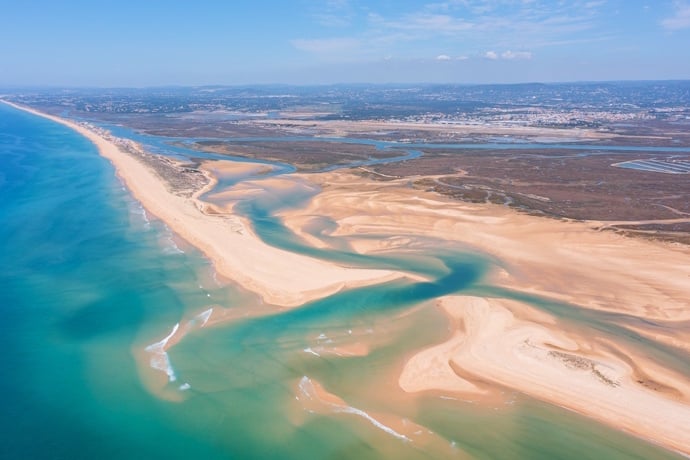
The Ria Formosa shows a softer side of the Algarve: sheltered lagoon waters, barrier islands, tidal channels, salt marshes, and fishing communities stretching for fifty kilometers along the eastern coast. A boat through the Ria Formosa moves slowly past islands where the only permanent residents are birds, flamingos included, and where the fishing boats look the same as they did two generations ago.
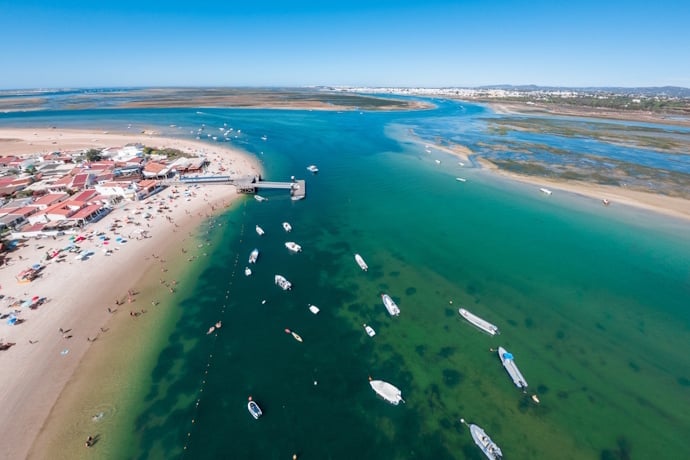
The island communities of Culatra and Armona sit within the lagoon, reachable only by water, and life there moves at a pace the mainland has left behind. Fishing boats come in and out of the channels on the same schedule they always have, nets are laid out to dry on the same walls and the seafood served in the small island restaurants comes from the water you arrived on. Arriving across the water sets a slower pace. The landscape opens up slowly, and the day becomes less about doing and more about noticing.
6. Travel Through Aveiro’s Canals on a Moliceiro
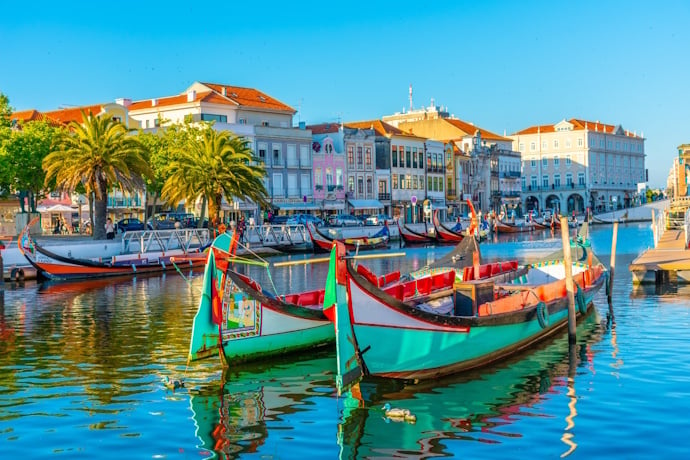
Aveiro's canals move through the city in a way that makes the boat the obvious way to see it. The moliceiro is a traditional flat-bottomed vessel, brightly painted with scenes on its prow that range from the devotional to the mildly comic, and it was originally used to collect seaweed along the lagoon channels. The boats still run through the central canal past the colorful Art Nouveau houses, the fish market and the bridges that connect the city's different districts.
The journey is short and unhurried and that combination suits Aveiro well. This is a city that works best at low speed: the canal reflections, the painted boats, the smell of the salt lagoon mixing with whatever is coming from the nearest pastelaria. A moliceiro ride frames Aveiro in a way that the canal banks only suggest.
7. Sail Along Madeira’s Mountainous Coast
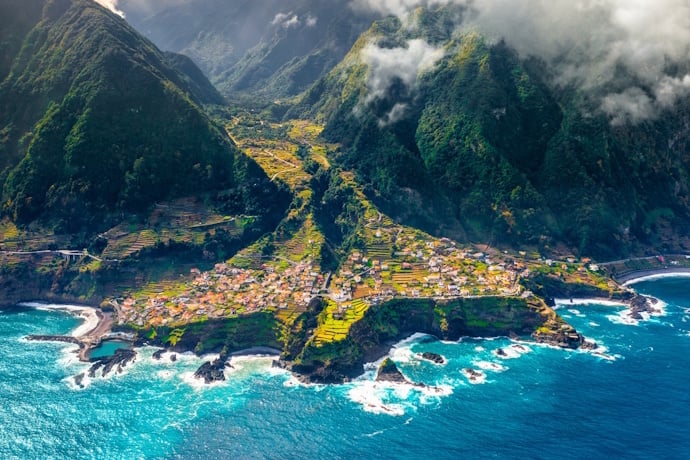
Madeira seen from the sea is a different island from the one you arrive at by plane. From the water, the mountains rise directly from the Atlantic with a verticality that is difficult to appreciate from land. The coastal cliffs show their full height, and the deep green of the interior comes down to the waterline. Boat trips from Funchal head west along the southern coast past sea caves, volcanic rock formations, and small fishing villages that are far easier to approach from the water than by road.
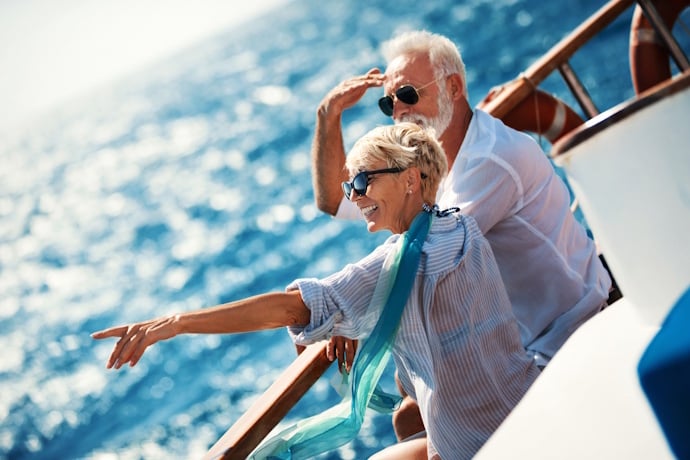
Dolphins and whales appear in Madeiran waters with some regularity, particularly along the southern coast, and a boat trip here can become a wildlife encounter without having been planned as one. The island's scale makes more sense from the sea. What looks compact on a map turns out to be steep, layered and considerably more dramatic when you are sitting at water level looking up at it.
8. Go Whale Watching in the Azores
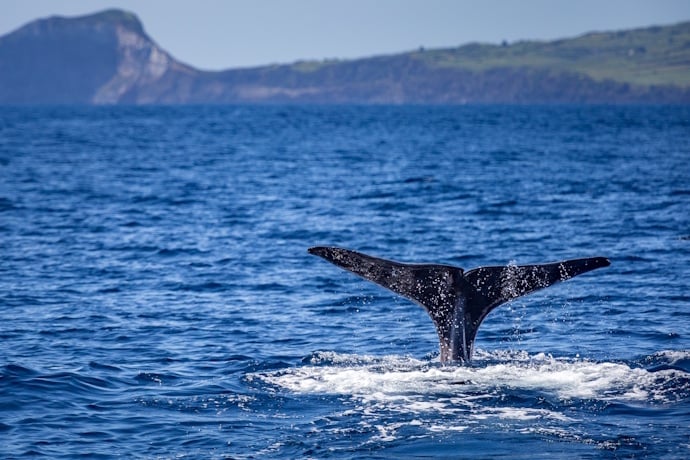
Azores whale watching is in a different category from anything else on this list. The archipelago sits in the middle of the Atlantic along migration routes used by sperm whales, blue whales, fin whales and several dolphin species, and the waters around São Miguel, Faial and Pico produce sightings with a consistency that has made the islands one of the best places in the world for marine wildlife observation.
Being on the water when a sperm whale surfaces nearby is the kind of moment that recalibrates your sense of scale. The animal moves with a slowness that makes everything around it feel small and very quiet, and sharing the same stretch of ocean, even briefly, makes the experience feel less thrilling than humbling. The Azores offer this in a setting that intensifies it further: open Atlantic, volcanic islands on the horizon, with the rest of the world reduced to something distant and abstract. It is a reminder that the ocean is not a backdrop. It is a living system, and being inside it, even for an afternoon, changes something in how you look at everything around it afterward.
Portugal Looks Different From the Water
Portugal is shaped by water in a way that goes deeper than geography. The rivers, the estuaries, the lagoons, and the ocean have defined how the country was built, how it fed itself, and how it understood the world beyond its borders. A boat trip changes the experience of a Portugal itinerary by placing you inside the element that shaped the country. It connects you to another way of understanding Portugal: through its culture, its wildlife, and its long, living relationship with the water. If you would like to immerse yourself in Portugal’s maritime spirit, get in touch and we will put together an itinerary that puts you where the country has always felt most itself.